Posts

Showing posts with the label family

Alfred Henry Appleyard; Fighting on the home front

Image
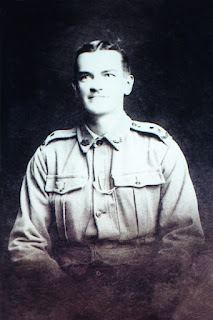
Born in 1872, Alfred Henry was the oldest son of the oldest son, Alfred Henry who, following the early death of his father Peter, had taken on the patriarchal role of the family. When war was declared, Alfred was 42, considerably older than many enlisting, however, this didn’t stop him from joining his brothers and cousins who had also enlisted to fight for their country.  Married to Bridget, with four children, in December 1915, the bridge builder filled out his first batch of enlistment forms. Dropping several years off his age, Alfred’s enlistment forms state that he was 35 years and 5 months.   Sent to the Military Camp at Royal Park, he would be assigned to the 24 th Battalion, forming part of the 6 th Brigade and assigned to the 2 nd division. Three weeks later Alfred would be transferred to the Headquarters Company and on June 9, to the 21 st Battalion, getting closer to being sent overseas.   But then on June 30, 1916, Alfred would be discharge...

Mary Ann Appleyard - A Mothers Strength

Image
As the mother of two young men, fighting for their God, King and country during World War One, Mary Ann was proud and stoic.  The mother of ten children, she had already experienced three of her sons dying as children during a diphtheria epidemic in 1891, the youngest only eleven months old.   Mary Ann also nursed daughter Alice through the disease before becoming ill herself.  Mary Ann’s strength and stoicism would no doubt help her when, as a single mother, she would see the country at war and one of her sons die, thousands of miles away from her, but always in her heart. Mary Ann was born in Alberton in 1854, only thirteen years after the town had been named.  Her parents, John and Jane, had come to the new colony from Ireland.   Marrying Arthur in 1875, Mary Ann would have her first child Alice in 1876 and her last child Muriel, 19 years later.  Only three years after the birth of Muriel, her husband would die following complications from the me...

Francis Horatio Appleyard

Image
The ninth of Arthur and Mary Appleyard's ten children, Francis was the first of the Appleyard boys to sign up to the Great War, signing his enlistment papers of August 18, 1914, two weeks after Australia entered the war. Known to his family as Frank, he was only 5 when his father, Arthur Horatio, son of convict Peter died.  Arthur had held numerous positions in the Alberton Shire from 1870 to 1898 and was the Shire Engineer when he caught the measles, leading to his early death at only 47. Three of his brothers had died as children during a diphtheria epidemic in 1891 and the family had moved from Gelliondale to Alberton to escape the sadness of the home.  Following the death of Arthur, Frank’s mother Mary, would lease out the rooms of her Alberton home to boarders to make money and ensure her children could continue their schooling. In 1903 Frank was registered as living in Won Wron and working as a labourer.  With his family well regarded in the area, and educatio...

Ernest Appleyard

Image
Ernest was almost 31 years of age when he made the decision to fight in the Great War.   The fourth child and third son of Jane and George Appleyard, Ernie was the sixth of their much loved sons to sign up when he was declared fit for active service on the 1 st of March, 1916. His brothers, Gordon, Charles, Allan and Darcy were all in various positions across the Western Front whilst Leopold was in the Middle East.   Ernie and his brother Walter tended to the family farms with his parents ageing and most of the local men of working age having already enlisted.    As well as his brothers, Ernie also had ten cousins fighting in the war.  There was much pressure for young men to ‘do their bit’ and still much naivety around the perceived romanticism of being a soldier.  Many families with young men still at home would receive white feathers, a sign of cowardice and design to pressure them into joining the war effort.  There was also pressure from th...

Darcy James Appleyard

Image
At the time World War One began, 20 year old Darcy was working on the family farm in Binginwarri, South Gippsland, with his parents. The sixth son of George and Jane Appleyard, by August, 1915, four of his brothers had already joined the army with Gordon in Turkey, Charles and Allan in the Western Front and Richard in the Middle East.   Now aged 21, and legally old enough to join the war efforts, Darcy would make the decision to follow his brothers into the theatre of war. The local paper, the Gippsland Standard proudly reported the enlistments, feeding the hope and pride of the families writing, “our boys have responded well to the call of ‘King and Country’.  In fact, we have very few of eligible age remaining in the district.” Enlisting on August 12, 1915, it would be almost 6 months later when Darcy would embark on the HMAT Warilda on February 8, 1916, disembarking in Marseilles, France, in March before joining the 9 th Reinforcement of the 23 rd Battal...

Leopold Arthur Appleyard

Image
Leopold Arthur Appleyard was the 12 th of 14 children of George and Jane Appleyard and the second son to enlist for the Great War.  At 19 years old, Leo was too young to enlist without his parents’ consent so his mother Jane went with him, and, with her husband, signed her consent for her youngest son to become a soldier and follow his brother Gordon into war. “I hereby give my consent to our son Leopold Arthur Appleyard to volunteer for active service with the Australian Imperial Force.” Barely two months after Gallipoli, the number of young men enlisting was at its peak and Leo would have felt great pride in volunteering on July 8 1915 and following in the steps of his older brother. Like his cousin Edgar before him, Leo was assigned to the 8 th Light Horse Regiment and, by February 1916, while in Heliopolis, Egypt, was appointed as a Driver to the regiment. During WW1, drivers were used by the British Army with the rank the equivalent of a Private.  In the Ligh...

Edgar John Appleyard

Image
The seventh of ten children, Edgar John Appleyard grew up in Alberton, a small town in South Gippsland.   His Grandfather Peter had come to Australia as a convict and settled in Alberton 4 years after it was surveyed.   A pioneering family in the district, Edgar’s father, Arthur Horatio was the Shire Engineer with his uncles all playing a role in the opening up of the region to European settlers. At the time World War One began, Edgar was a labourer, 23 years old, single and presumably good on horseback. Exactly what the Government was looking for as they sought Australian men to fight for England.   Just passing the strict medical test, Edgar signed onto the 8 th Light horse Regiment in October 1914, three months after the war began. Considered the ‘national arm of Australia’s defence’, the Lighthorse Regiments were made up mainly of young men from regional areas with many bringing their own horses.   As part of their enlistment for the regiments, the re...

Introduction: A Family At War

Image
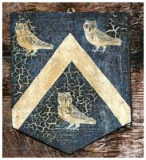
The Appleyard name can be found as early as 1115 with William De Apelgart.   William’s son, also named William, was a Knight in the court of King Stephen, and throughout the various rulers, the name continued to be linked with the Court of England. Through the 100 year war, the War of the Roses, the civil war and the Jacobite revolution, the Appleyard’s have fought for their God, ruler, and country.   And, as we look at our more recent history, our ancestors have continued to leave their families, fighting in the Boer War, the Great War, and World War II. This blog tells the stories of those that have fought under the name of Appleyard.   Stories of heroes, leading the charge in Gallipoli, writing letters home from a strange land and being laid to rest in foreign countries having made the ultimate sacrifice.   But it also tells the stories of their forefathers including one who died at the Battle of Flodden, the last battle where a King would fight with his...